
Hey friend, let’s talk about something that totally changed my perspective on dieting: carb cycling macros. If you’re anything like me, you’ve probably tried a bunch of traditional diets that left you feeling hangry, exhausted, and honestly? Pretty miserable. You know that cycle—you start strong, lose a few pounds, then BAM. The scale stops moving, and suddenly you’re white-knuckling it through every day trying not to faceplant into a pizza.
Here’s the thing: carb cycling is this strategic nutritional approach where you basically alternate your carbohydrate intake based on what you’re doing that day, your goals, and what your metabolism needs. And the best part? You still get to eat carbs. Like, actual carbs. Not sad, lettuce-wrapped substitutes.
The core benefit that got me hooked is this: carb cycling lets you enjoy those delicious carbs while still promoting healthy eating and weight loss, without falling into the trap of those super rigid diets that make you want to cry into your plain chicken breast.
Now, here’s where it gets interesting. You know how continuous calorie restriction can basically slow your metabolism down to a crawl? Yeah, that’s called metabolic adaptation, and it’s why so many people hit those frustrating weight loss plateaus. Carb cycling is designed to be the workaround—a more sustainable solution that keeps your body guessing in all the right ways.
So who’s this for? Athletes crushing it at the gym, physique competitors prepping for shows, folks stuck at a plateau (hi, that was me), busy people who need flexibility, and women dealing with hormonal fluctuations that make regular dieting feel impossible. Basically, if you’re tired of the same old diet drama, stick around.
- Understanding the Science: How Carb Cycling Optimizes Metabolism and Hormones
- Calculating Your Carb Cycling Macros: A Precise 5-Step Formula
- Integrating Exercise and Nutritional Periodization
- Practical Application: Food Choices and Meal Planning
- Advanced Topics and Comparisons
- Carb Cycling vs. Keto and Low-Carb Diets
- Carb Cycling vs. Macro Cycling
- Avoiding Common Carb Cycling Pitfalls
- Frequently Asked Questions
- Is carb cycling suitable for everyone?
- Can carb cycling help break a weight loss plateau?
- How long should I follow a carb cycling plan?
- What is the optimal protein intake when carb cycling?
- What should I eat on low-carb days?
- Conclusion: Achieving Sustainable Results
Understanding the Science: How Carb Cycling Optimizes Metabolism and Hormones
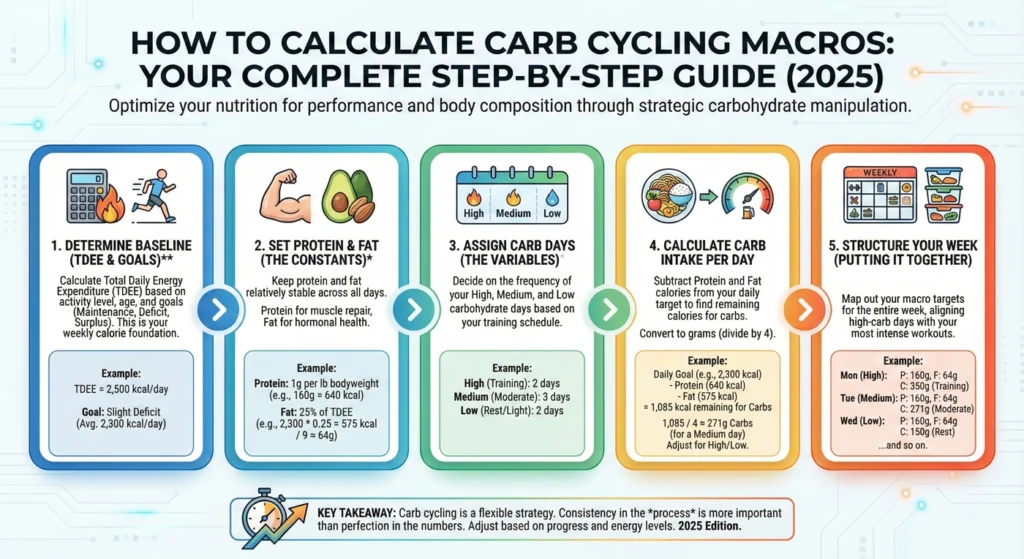
Okay, I promise not to get too nerdy here, but understanding why carb cycling macros work is actually pretty cool. Let’s break it down.
The Core Mechanism: Metabolic Plasticity and Fuel Switching
Think of carb cycling as a way to keep your metabolism on its toes. You’re alternating between high-carb and low-carb days to essentially “trick” your body so it doesn’t adapt to the same boring calorie restriction day after day.
On high-carb days: You’re replenishing those muscle and liver glycogen stores (we’re talking about 400-600g capacity if you’re trained). This creates this awesome anabolic environment that supports recovery and keeps your training strong. Your muscles are basically saying “thank you!”
On low-carb days: Your body shifts gears and starts using alternative fuel sources. Studies show that fatty acid transport into mitochondria can increase by 40-60% when you’re low on carbs. Translation? You’re burning fat, baby.
Hormonal Benefits: Regulating Key Metabolic Signals
This is where things get really interesting. Carb cycling with macros isn’t just about calories in, calories out—it’s about working with your hormones, not against them.
Leptin Regulation: Ever heard of leptin? It’s this hormone that basically tells your brain you’re full and helps regulate your metabolism. Problem is, when you’re restricting calories for a long time, leptin levels drop, and your metabolism can slow down by 12-15%. Not cool. But strategic high-carb “refeeds” help restore those leptin levels, keeping your metabolism humming along.
Insulin Sensitivity: Here’s the deal—when you alternate your carb intake instead of keeping it constantly high, you prevent your insulin receptors from getting desensitized. Clinical trials have shown that carb cycling can enhance insulin sensitivity by 18-22%, which is especially helpful if you’re carrying some extra weight.
Quick heads up though: If you have diabetes or any pre-existing conditions, definitely chat with your doctor before diving into this. Safety first, always.
Thyroid Hormones: Low-carb diets can sometimes mess with your thyroid function, potentially slowing things down. Carb cycling aims to offset this by giving your thyroid those periodic carb boosts it needs to keep producing hormones like T4 at healthy levels.
Maximizing Body Composition: Fat Loss and Muscle Preservation
This is honestly my favorite part. Studies on carb-restricted diets show some pretty impressive results for fat loss while preserving or even increasing lean body mass. One study I came across showed participants losing about 3.4 kg of fat while gaining 1.1 kg of lean muscle over just 6 weeks. That’s not just weight loss—that’s actually changing your body composition.
And when you time those high-carb days with your strength training? Magic happens. Insulin becomes this muscle-building powerhouse, helping with recovery and growth. The key is keeping your protein intake consistent (around 1.6 to 2.2 grams per kg of body weight) across all days to prevent any muscle catabolism.
Calculating Your Carb Cycling Macros: A Precise 5-Step Formula
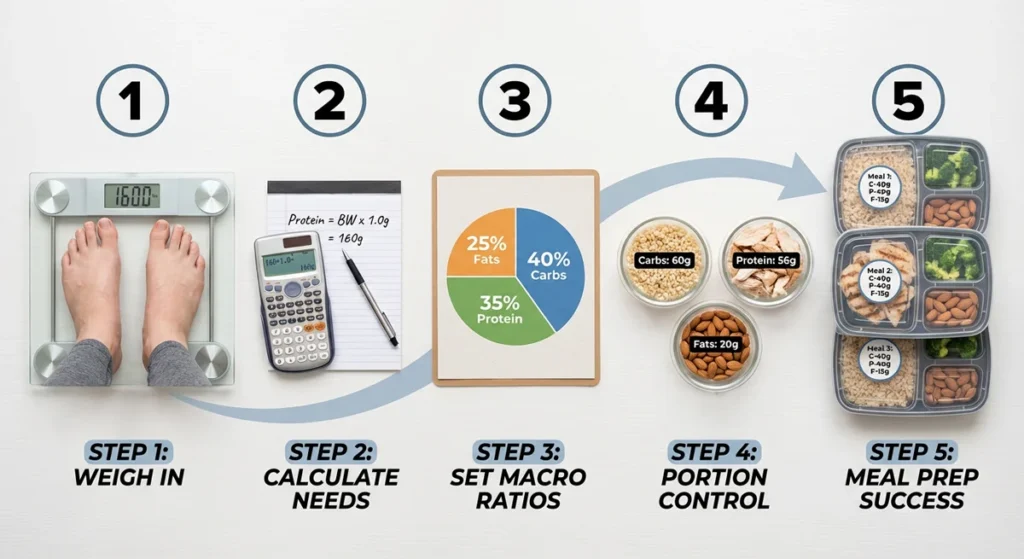
Alright, let’s get practical. You’re probably wondering, “How do I actually calculate carb cycling macros?” Don’t worry—I’ve got you covered with a step-by-step formula that’ll make this super straightforward.
Step 1: Calculate Your Baseline Caloric Needs (TDEE)
First things first: you need to know your Total Daily Energy Expenditure (TDEE). This is basically how many calories you burn in a day. You calculate it by taking your Basal Metabolic Rate (BMR)—what you’d burn just lying in bed all day—and multiplying it by an activity factor based on how much you move around.
For weight loss, you typically want a modest deficit, somewhere around 15-20% below your TDEE. No need to be overly aggressive here.
Step 2: Establish Consistent Protein and Fat Targets
Protein is your best friend. Seriously. Your protein intake should stay relatively consistent across all your cycling days because it’s what keeps your muscles intact. We’re looking at about 1.15 grams per pound of body weight, or 1.6 to 2.2 grams per kilogram of body weight if you prefer metric.
Fat intake is a bit more flexible and typically varies inversely with your carb intake. So on high-carb days, you’ll eat less fat to keep calories balanced. Makes sense, right?
Step 3: Determine Carb Intake for Each Cycle Day
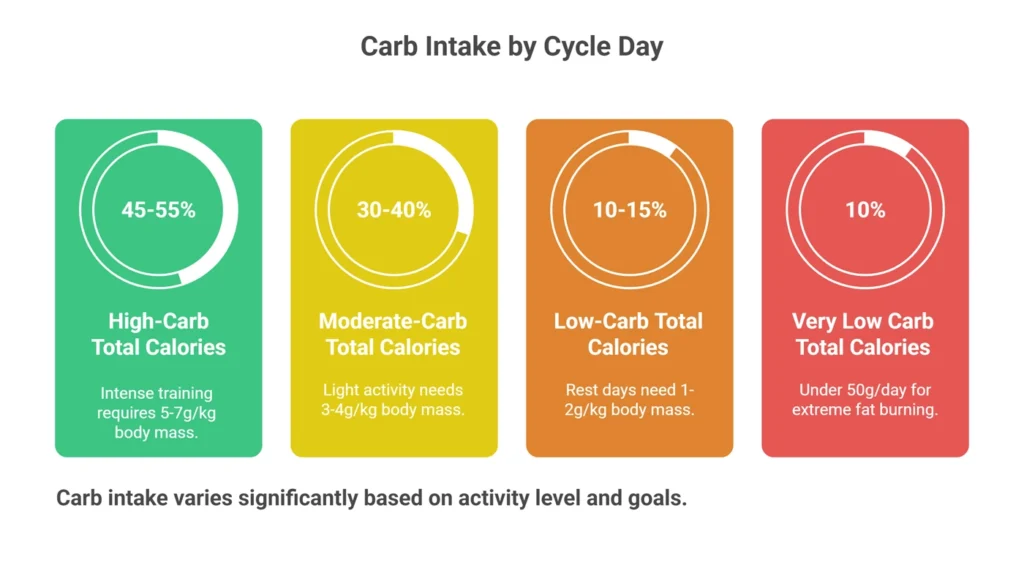
Here’s where the actual cycling happens. Your carb intake changes based on what kind of day you’re having. I’ve put together this handy table that breaks it all down:
| Day Type | Carb % of Total Calories | Protein % of Total Calories | Fat % of Total Calories | Carb Goal (g/kg BM) | Focus |
|---|---|---|---|---|---|
| High-Carb | 45–55% (or 5-7g/kg) | 25–30% (1.6-2.2g/kg) | 20–25% | 2.0–2.5g/lb or 5–7g/kg | Intense Training/Refueling |
| Moderate-Carb | 30–40% (or 3-4g/kg) | 30–35% | 30–35% | 0.8 to 0.85 x High Carb amount | Light Activity/Maintenance |
| Low-Carb | 10–15% (or 1-2g/kg) | 35–40% | 45–50% | ~0.5g/lb or 1–2g/kg | Rest/Fat Adaptation |
| Very Low Carb | <10% (Under 50g/day) | Higher | Higher | Very low carbs/Ketogenic state | Extreme Fat Burning |
Pro tip: If you want to use a carb cycling macros calculator, there are tons of free ones online that’ll do all this math for you. But it’s good to understand the logic behind it.
Step 4 & 5: Implementing and Adjusting
Start simple. Don’t overcomplicate things right out of the gate. Try a classic cycle where you just alternate high and low carb days. Get comfortable with that before getting fancy.
Evaluate and adjust regularly. Every three or four weeks, take stock of how things are going. And listen—don’t just obsess over the scale. Pay attention to your energy levels, take body measurements, notice how your clothes fit. Sometimes you’re building muscle while losing fat, and the scale might not move much, but your body is totally transforming.
Integrating Exercise and Nutritional Periodization

Let’s talk about how to calculate carb cycling macros around your actual workouts, because timing matters here.
Aligning Carbohydrates with Training Intensity (The “Work Required” Paradigm)
This is basically “fueling for the work required,” and it’s super logical once you think about it. Your carb intake should match your activity level for that day.
High-Carb Timing: Schedule your high-carb days for when you’re doing intense workouts—think resistance training or HIIT sessions. This replenishes your glycogen stores, optimizes your performance, and helps your muscles repair. Fun fact: consuming 75-100g of fast-acting carbs within 30 minutes after strength training can accelerate muscle synthesis by 28%. That’s like giving your muscles a VIP recovery treatment.
Low-Carb Timing: Save your low-carb days for rest days or when you’re doing low-intensity stuff like yoga, gentle cardio, or a nice walk. This encourages your body to tap into stored fat for energy, which is exactly what we want.
Meal Timing Considerations
Some quick guidelines that have worked really well for me:
Breakfast: Get some protein, carbs, and fat in within about an hour of waking up. Kickstart that metabolism.
Final Meal: Here’s a rule I stick to religiously—the last meal of the day should ALWAYS be low carb. This helps with overnight fat burning and just generally helps you sleep better.
Peri-Workout Nutrition: On high-carb days, definitely get carbs before and after your workout. On rest days or low-carb days, delay those carb-heavy meals to extend that fat-burning window a bit longer.
Practical Application: Food Choices and Meal Planning
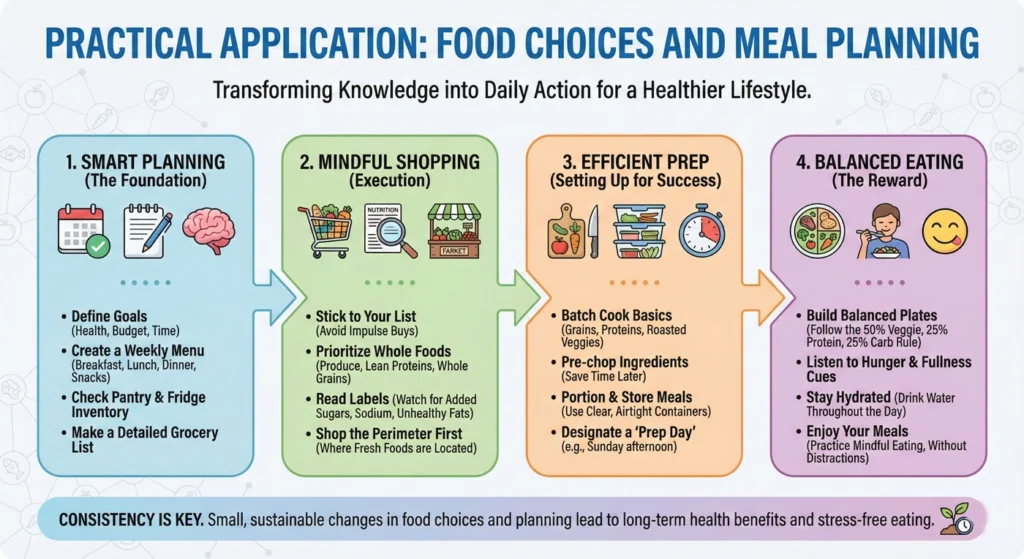
Theory is great and all, but let’s talk about actual food because, you know, that’s the fun part.
Prioritizing Quality: Recommended Carbohydrate Sources
Not all carbs are created equal, my friend. Focus on unrefined, complex carbohydrates that give you sustained energy and are loaded with fiber, vitamins, and minerals.
Your carb all-stars: Whole grains like brown rice, oats, and quinoa. Starchy vegetables like sweet potatoes, yams, and kabocha squash (seriously, try kabocha if you haven’t—it’s amazing). Legumes like beans and lentils. Whole fruits like berries, apples, kiwis, and watermelon. And of course, non-starchy vegetables like leafy greens, broccoli, and cauliflower.
The carbs to limit: Simple or refined carbs and added sugars. We’re talking candy, soda, heavily processed foods, most breakfast cereals (sorry, Lucky Charms), many salad dressings, and sweetened yogurt. You don’t have to eliminate them entirely, but they shouldn’t be your go-to.
Importance of Protein and Healthy Fats
Protein Sources: Go for high-quality options with good bioavailability. Lean meats, fish, eggs, cottage cheese are all fantastic. If you’re plant-based, lentils, mung beans, and tofu are solid choices.
Healthy Fats (Super Important on Low-Carb Days): When your carbs are low, fats become your main energy source. Include omega-3 fatty acids, avocados (is there anything they can’t do?), chia seeds, nuts, seeds, and olive oil. Your brain and hormones will thank you.
Sample Weekly Cycle Structure
Want to see what this looks like in practice? Here’s a sample week designed for general weight management and body recomposition:
- Monday: High-carb (Training day—leg day, anyone?)
- Tuesday: Low-carb (Rest or active recovery)
- Wednesday: High-carb (Training day)
- Thursday: Low-carb (Rest day)
- Friday: High-carb (Training day)
- Saturday: Moderate-carb (Active recovery—maybe a hike or bike ride)
- Sunday: Low-carb (Full rest day)
This gives you about 4 high/moderate days and 3 low days, which is a pretty solid balance for most people.
Advanced Topics and Comparisons
Carb Cycling vs. Keto and Low-Carb Diets
People always ask me about this, so let’s clear it up.
The key difference: Carb cycling strategically integrates carbs throughout your week, while a traditional ketogenic diet keeps carbs consistently super low (like 5-10% of your energy intake) to maintain ketosis.
About ketosis: Here’s the thing—those high-carb days actively break ketosis. So if you’re trying to stay in ketosis all the time, carb cycling isn’t really compatible with that. They’re different strategies.
Long-term considerations: Some research suggests that very long-term, ultra-low-carb diets might actually increase insulin resistance in some people. Carb cycling or even a higher-carb plant-based diet might be safer options for long-term metabolic health. But honestly, more research is needed here.
Carb Cycling vs. Macro Cycling
These sound similar but they’re actually different approaches:
Carb Cycling: You’re alternating high and low carb days (daily or weekly), keeping protein consistent, and adjusting fat opposite to carbs. That’s what we’ve been talking about this whole time.
Macro Cycling: This is more about sticking to one macro breakdown for a period (like 2 weeks), then switching to a completely different ratio. For example, you might do 40% protein, 30% carbs, 30% fat for two weeks, then switch it up. The goal is simplification and consistency within each phase.
Both can work—it just depends on what fits your lifestyle and preferences better.
Avoiding Common Carb Cycling Pitfalls
Let me save you from some mistakes I made when I first started:
Overeating on High-Carb Days: Listen, high-carb days aren’t cheat days. They’re strategically planned fuel days. You still need to track your food and stick to reasonable portion sizes. Don’t go all-out at the all-you-can-eat pasta buffet (I learned this the hard way).
Under-eating on Low-Carb Days: On the flip side, don’t starve yourself on low days. Severe deprivation can actually stall weight loss, trigger fatigue and cravings, and mess with your leptin levels. Make sure you’re getting adequate protein and healthy fats.
Lack of Consistency: Carb cycling requires pretty close tracking and monitoring. It’s not a beginner strategy—it’s generally recommended for people who already have their foundational habits down and are comfortable with macro counting. If tracking stresses you out or you’re new to this whole thing, maybe start with simpler approaches first.
Frequently Asked Questions
Is carb cycling suitable for everyone?
Honestly? Not for everyone. It’s super effective for athletes, bodybuilders, and active folks looking for physique improvements or trying to break through plateaus. But if you struggle with tracking, get overwhelmed by details, or have conditions like diabetes or low blood sugar, you might want to skip this one or at least talk to your doctor or a registered dietitian first.
Can carb cycling help break a weight loss plateau?
Yes! This is actually one of the most common reasons people try it. By alternating high and low carb days, you prevent that metabolic adaptation that causes plateaus. It helps regulate hormones like leptin and can actually boost your basal metabolic rate. If you’ve been stuck at the same weight for weeks despite doing everything “right,” this might be worth exploring.
How long should I follow a carb cycling plan?
There’s no one-size-fits-all answer here. Most people follow it for 8–12 weeks initially, then make adjustments based on progress and how their metabolism responds. Some people love it so much they incorporate the principles into their long-term lifestyle. Others use it as a tool for specific goals and then transition to something else. Do what works for you.
What is the optimal protein intake when carb cycling?
Keep your protein high and consistent across all phases—typically 1.6 to 2.2 grams per kilogram of body weight per day. This supports muscle recovery and prevents muscle loss, which is crucial whether you’re on a high or low carb day.
What should I eat on low-carb days?
Think protein and healthy fats as your main players, with carbs coming primarily from fibrous veggies. My go-to meals include stuff like grilled chicken or salmon with avocado and a big salad, eggs with spinach and olive oil, or a stir-fry with lots of veggies and tofu in coconut oil. Nuts and seeds make great snacks.
Conclusion: Achieving Sustainable Results
Here’s the bottom line: carb cycling macros provide a flexible, powerful strategy to manage your energy, balance your hormones, and improve your body composition without feeling like you’re living in diet prison.
The beauty of this approach is that it’s not one-size-fits-all. You can (and should!) personalize it based on your goals—whether that’s weight loss, muscle gain, athletic performance, or just feeling better in your own skin—and your fitness level.
But here’s my final piece of advice: while I’ve given you a solid framework to work with, everybody is different. If you’re serious about optimizing your results and want someone to help you dial in your specific needs, consider working with a registered dietitian or nutritionist who understands carb cycling. They can help you create a plan that’s tailored specifically to you, your lifestyle, and your goals.
And hey, give yourself some grace as you figure this out. It takes time to find your rhythm with carb cycling, and there’ll probably be some trial and error along the way. That’s totally normal and part of the process.
Ready to give it a shot? Start simple, track your progress, listen to your body, and adjust as needed. You’ve got this!