
Okay, so here’s the deal—if you’re looking to lose weight but the thought of joining a gym makes you want to hide under your blankets, I’ve got some seriously good news for you. Walking for weight loss is literally one of the best-kept secrets in the fitness world, and honestly? It’s been right under our noses (or should I say, under our feet?) this whole time.
Walking has been called the “nearest activity to perfect exercise,” and I’m not even exaggerating here. Unlike those wildly intense workouts that leave you collapsed on the floor questioning all your life choices, walking is accessible, low-risk, and you can pretty much do it anywhere. No special equipment needed—just you and your shoes.
Now, when we talk about weight loss, let’s get real about what we actually mean. Most of us aren’t just obsessed with the number on the scale—we want to lose body fat, especially that stubborn stuff around our midsection. We want to look better, feel better, and fit into those jeans that’ve been giving us the evil eye from the back of the closet.
Here’s where the science comes in (don’t worry, I’ll keep it simple): weight loss boils down to something called the energy balance equation. Basically, you need to burn more calories than you eat. That’s your calorie deficit right there. And walking? It’s one of the easiest ways to tip that balance in your favor by increasing the “calories burned” side of the equation.
- Walking vs. Vigorous Exercise: The Fat Loss Advantage
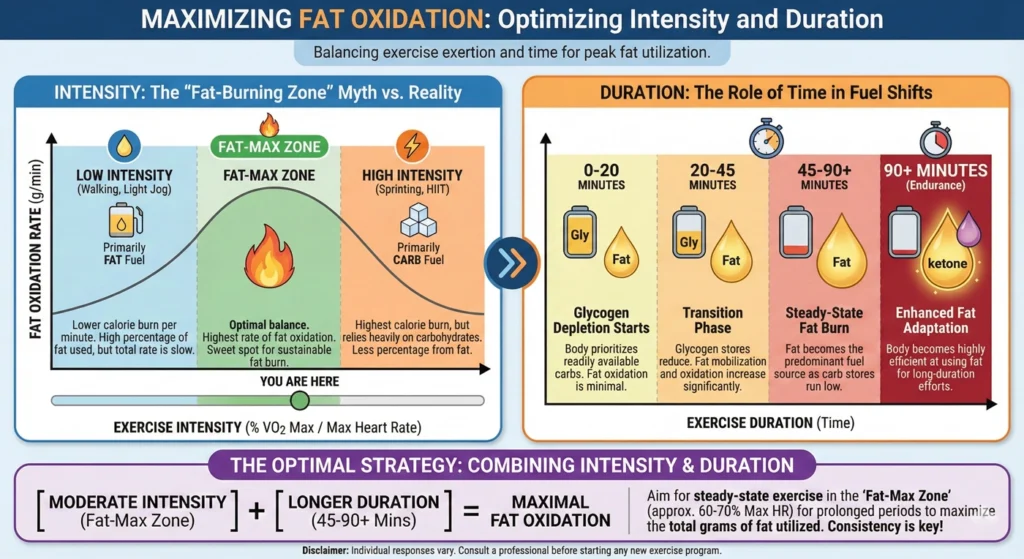
- Maximizing Fat Oxidation: Optimizing Intensity and Duration
- Practical Metrics: Step Counts and Progression
- The Optimized 4-Week Progressive Walking Plan
- Avoiding the 10 Common Walking Mistakes
- The Comprehensive Health Benefits of Regular Walking
- Walking Your Way to Sustainable Success
Quick takeaways you need to know:
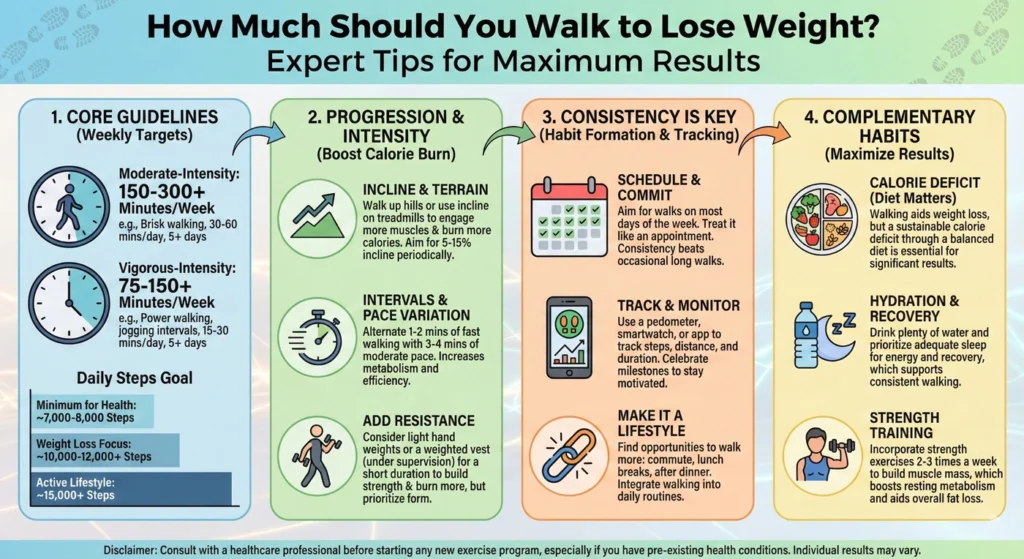
- To keep your weight stable and stay healthy, shoot for at least 150 minutes of moderate exercise per week (that’s like 30 minutes, five times a week—totally doable!)
- If you’re serious about long-term weight loss, you’ll want to aim for over 250 minutes per week
- Your body burns fat most efficiently when you’re at about 60% of your maximum heart rate (we’ll break this down later, promise!)
Walking vs. Vigorous Exercise: The Fat Loss Advantage
Alright, let’s settle something that confuses everyone: Is walking actually better than running for losing fat?
I know it sounds too good to be true, but hear me out.
Fat is Your Walking Fuel
When you’re walking at a low-to-moderate pace, your body preferentially burns fatty acids as its main energy source. It’s like your body saying, “Oh, we’re just cruising along here? Cool, let me tap into these fat stores.” This happens through something called the aerobic metabolic system—fancy words for your body using oxygen to burn fat for energy.
Running, especially when you’re pushing hard, actually uses more glycogen (stored carbs) than fat unless you’re jogging super slowly. So yeah, that sprint session might feel more intense, but it’s not necessarily burning more fat.
The Cortisol Problem
Here’s something that blew my mind when I learned it: high-intensity running can spike your cortisol levels. Cortisol is basically your body’s stress hormone, and when it’s elevated, it can actually promote fat storage—especially that annoying belly fat. Walking keeps your cortisol nice and low, which helps you stay in fat-burning mode instead of fat-storing mode.
You Won’t Eat Everything in Sight
Ever gone for a long run and then felt like you could devour an entire pizza by yourself? Yeah, me too. Running seriously cranks up your appetite, which can totally sabotage that calorie deficit you’re trying to create.
Walking, on the other hand, has a neutral or even appetite-suppressing effect. Translation? You’re way less likely to eat back all the calories you just burned. Plus, how much should I walk for weight loss becomes an easier question when you’re not exhausted and starving all the time. You can walk consistently for long periods without feeling destroyed, injured, or completely burnt out.
Keep That Muscle
Here’s another win: walking is way less catabolic (muscle-wasting) than excessive running. When you lose weight, you want to lose fat, not muscle, right? Muscle is your metabolic engine—it burns calories even when you’re just sitting on the couch. Walking helps you preserve that precious muscle mass, which means your metabolism doesn’t crash as you lose weight.
Maximizing Fat Oxidation: Optimizing Intensity and Duration
Okay, so you’re convinced that walking is awesome. Now let’s talk about how to optimize it so you’re burning maximum fat.
Determining Your Optimal Fat-Burning Heart Rate
Remember when I mentioned that magic 60% heart rate number? Let’s figure out what that actually means for you.
Your maximum fat oxidation happens at approximately 60% of your maximum heart rate. To calculate yours:
Maximum Heart Rate = 220 minus your age
So if you’re 35, your max heart rate is roughly 185. Sixty percent of that would be around 111 beats per minute.
Not into math or don’t have a heart rate monitor? No worries! Research suggests the average optimal pace for men is about 3.4 miles per hour, and for women, it’s around 3.0 miles per hour. That’s basically a brisk walk—fast enough that you’d be a little out of breath but could still carry on a conversation (though maybe not sing your favorite song).
Duration is EVERYTHING
Here’s the kicker: the longer you walk, the more fat you burn. Makes sense, right?
Studies have shown that a 60-minute walking session is significantly more effective than a 40-minute one when it comes to improving body composition. One study found that after 12 weeks, people doing 60-minute walks showed greater reductions in body weight, BMI, waist circumference, and visceral fat compared to those doing 40-minute walks.
When you exercise at low-to-moderate intensity for 60-120 minutes, fat becomes the dominant energy source. Your body basically shifts gears and starts really tapping into those fat stores.
Mix It Up with High-Intensity Walking
Don’t get me wrong—steady-state walking is fantastic. But if you really want to supercharge your results, try these techniques:
Interval Walking: Here’s a cool Japanese technique—alternate between three minutes of fast walking (hard enough that speaking in full sentences gets tough) and three minutes of easy walking. This approach significantly boosts your fitness, muscle strength, and overall health markers way more than just walking at the same pace the whole time.
Incline and Weighted Walking (Rucking): Find some hills, or throw a weighted backpack on (start light, like 10-15 pounds). This is called rucking, and it’s incredible for building fitness and mental toughness without beating up your joints like running does. Plus, you’ll feel like a total badass.
Practical Metrics: Step Counts and Progression
Let’s talk numbers—specifically, how many steps you should actually be aiming for.
Understanding Where You Stand
Here’s how activity levels break down:
- Less than 5,000 steps/day: Sedentary (basically couch potato territory)
- 5,000 to 7,499 steps/day: Low active
- 7,500 to 9,999 steps/day: Somewhat active
- 10,000+ steps/day: Active
- 12,000+ steps/day: Very active (you’re crushing it!)
Setting Your Step Goal
You’ve probably heard about the 10,000 steps thing, right? Honestly, it’s kind of an arbitrary number that marketing people latched onto. But it’s not a bad target!
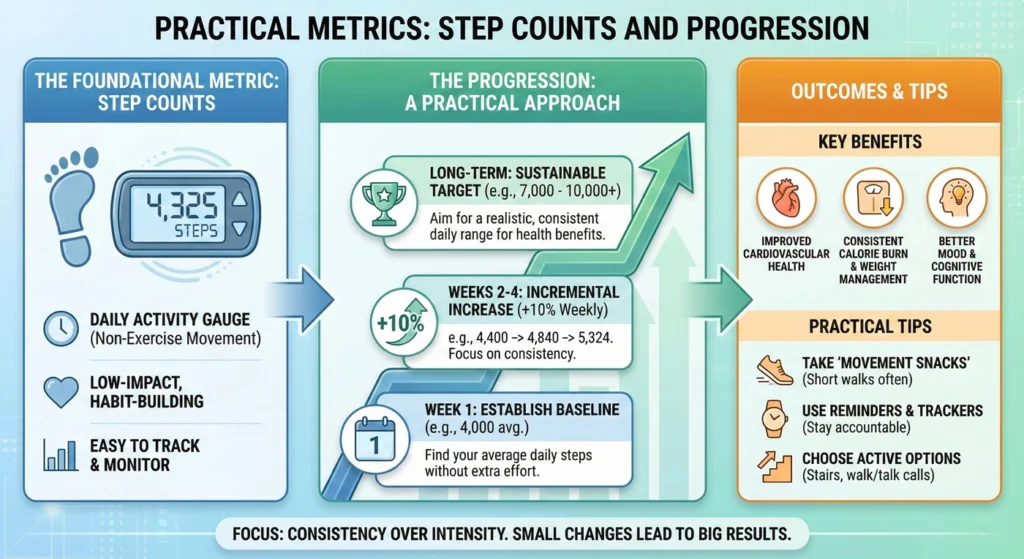
For weight loss, aim for 4,000–10,000 steps per day depending on where you’re starting from. If you’re really serious and want to see significant results? Shoot for 15,000 steps per day (that’s about 70,000 steps per week).
Don’t Go Overboard Right Away
Real talk: if you’re currently doing 3,000 steps a day and suddenly try to jump to 15,000, you’re going to burn out faster than a cheap candle.
Here’s the smart approach:
- Track your baseline for 3-4 days (just walk normally and see where you’re at)
- Increase by about 2,000 steps every two weeks
- Keep going until you hit your goal
- Remember: consistency beats intensity every single time
The Optimized 4-Week Progressive Walking Plan
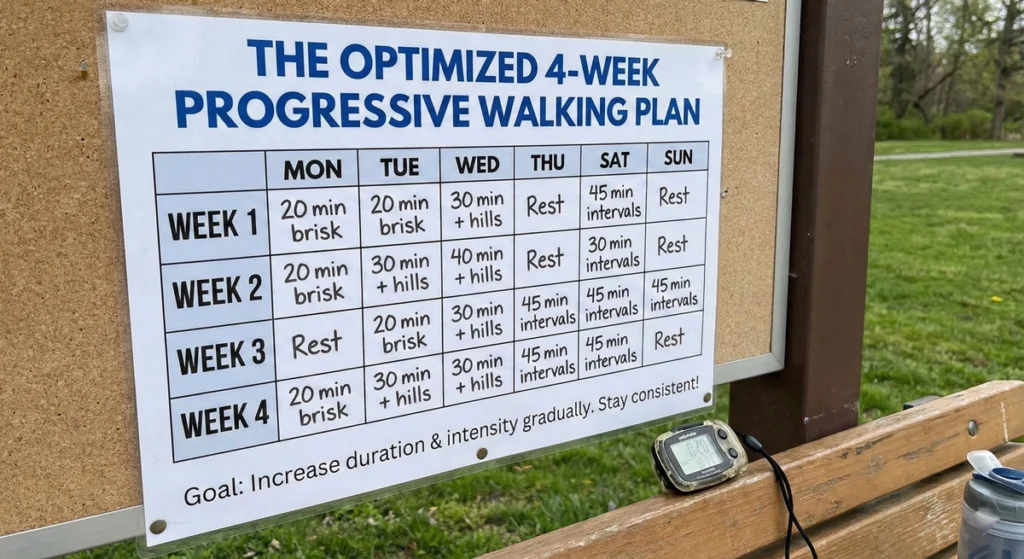
Alright, let’s get you started with an actual plan you can follow. This gradually builds up your walking routine so you don’t hate life by day three.
Week 1: Getting Started
Goal: Get comfortable walking 10-15 minutes at a moderate pace
Start with 3-5 sessions of just 10-15 minutes each. Include a 5-minute warm-up (slow walk, maybe some light stretching) and cool-down at the end. You’re just building the habit here—no heroics required.
Target: Increase your daily average to 5,000 steps
Week 2: Increasing Duration
Goal: Build up to 15-20 minutes of brisk walking
Bump your sessions up to 20 minutes, and aim for at least 3-4 days of moderate activity. By the end of this week, you should be hitting about 150 minutes total.
Target: Stay consistent with duration; get that weekly total to 150 minutes
Week 3: Introducing Intensity
Goal: Add some spice with intervals or inclines
Time to kick it up a notch! Try interval walking—speed up for 1 minute, then return to normal pace for 1 minute. Or find a hill and power up it. Aim for three 40-minute brisk walks this week.
Target: Increase pace without making yourself miserable
Week 4: Optimal Fat Burning
Goal: Hit that sweet spot with longer duration
Focus on 30-minute brisk walks most days, but try to get at least one or two 60-minute sessions in. This is also a great time to add in some strength training (we’ll talk about why in a sec).
Target: Maintain 8,000-10,000 steps daily consistently
Avoiding the 10 Common Walking Mistakes

Look, I’ve made pretty much all these mistakes, so learn from my pain, okay?
1. Not walking enough or consistently: Walking twice a week for 15 minutes isn’t gonna cut it. Treat your walks like non-negotiable appointments—because they are.
2. Neglecting intensity: A leisurely window-shopping stroll isn’t going to move the needle much. Pick up the pace! You should feel slightly warm and a bit breathless.
3. Skipping warm-up and cool-down: I know, I know, you’re in a hurry. But trust me—taking 5 minutes to warm up and cool down prevents injuries and helps your muscles recover.
4. Forgetting hydration and nutrition: Here’s the harsh truth: you can’t out-walk a bad diet. You could walk all day, but if you’re eating pizza and ice cream for every meal, you’re not going to lose weight. Focus on protein, whole grains, fruits, and veggies. Stay hydrated!
5. Not including strength training: Walking alone isn’t enough. Add some squats, lunges, and push-ups at least twice a week. Building muscle boosts your metabolism, which means you burn more calories even when you’re marathoning Netflix.
6. Walking in the wrong shoes: Please, for the love of your feet, get decent walking shoes! Your beat-up old sneakers from 2015 aren’t cutting it. Proper shoes mean less pain and fewer injuries.
7. Ignoring proper form: Stand tall, look up (not at your phone!), and really swing those arms. Good form can actually help you burn 5-10% more calories. Plus, you’ll look like you know what you’re doing.
8. Not planning recovery time: Rest days are not optional—they’re when the magic happens. Your muscles need time to repair and rebuild.
9. Failing to track progress: Get a fitness tracker or use your phone’s pedometer. Seeing your progress is super motivating and keeps you accountable.
10. Walking the same route: Variety is the spice of life! Mix up your routes to keep things interesting and prevent your body from adapting (which can cause those annoying plateaus).
The Comprehensive Health Benefits of Regular Walking
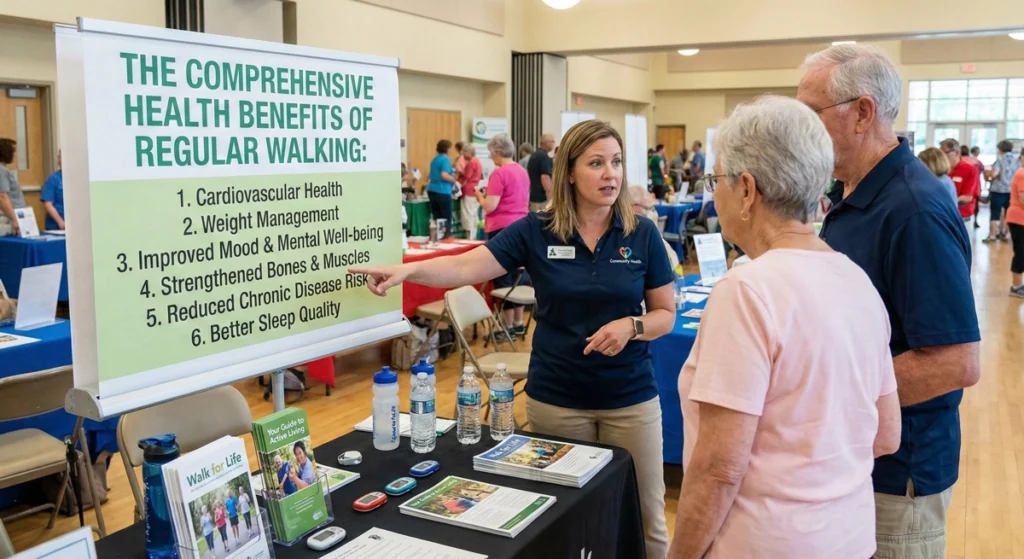
Okay, so beyond just fitting into your favorite jeans, walking does some pretty incredible things for your overall health:
Cardiovascular Health: Walking for 30 minutes a day lowers your risk of heart disease, stroke, and diabetes. It literally makes your heart healthier and reduces blood pressure.
Metabolic Improvement: Walking helps your body handle sugar better, reducing your risk of Type 2 diabetes—even if you haven’t lost weight yet!
Mental Wellness: Honestly, this might be my favorite benefit. Walking boosts your mood, decreases stress, and helps with depression and anxiety. It’s like therapy, but free and you get fresh air. Walking outdoors is even better for mental health.
Body Composition Changes: Walking specifically targets belly fat (that visceral fat we all hate). Combined with strength training, it’s a body-transformation powerhouse.
Longevity: People who walk more tend to live longer, period. The biggest improvements happen when you go from doing almost nothing to walking regularly—so if you’re starting from zero, you’re about to see some amazing changes!
Frequently Asked Questions
Can I lose weight by walking 30 minutes a day?
Absolutely! Walking 30 minutes a day, five days a week, combined with eating in a calorie deficit, can lead to significant weight loss. You’ll burn about 200-300 calories per session at a moderate pace. That adds up fast!
How much exercise per week is necessary for long-term weight management?
While 150 minutes weekly is great for general health, if you want serious weight loss results, aim for 200-300 minutes per week. That’s about 40-60 minutes most days of the week.
Should I walk or run to lose belly fat?
Both work, but walking might actually be better for most people! It’s more sustainable long-term, easier on your joints, and when done at the right intensity, it targets fat as the primary fuel source more efficiently than running. Plus, you’re way less likely to quit.
What is “brisk walking”?
Brisk walking warms you up, gets your heart rate elevated, and makes your breathing faster—but you can still talk (just not belt out your favorite Taylor Swift song). Aim for at least 100 steps per minute. Think “power walk” not “Sunday stroll.”
Walking Your Way to Sustainable Success
Here’s the bottom line: walking for weight loss isn’t just effective—it’s sustainable, affordable, and accessible. You don’t need a gym membership, fancy equipment, or even that much time to start seeing results.
The key is combining consistent, optimized walking (remember: duration and intensity matter!) with smart nutrition. Don’t obsess over perfection—just put one foot in front of the other, stay consistent, and gradually challenge yourself.
Your future self is going to thank you for starting this journey. So lace up those shoes, step outside, and let’s get walking! Whether you start with 5,000 steps or work your way up to 15,000, you’re making progress. And that’s what really counts.
Trust me—once you see the results and feel how much better you feel, you’ll wonder why you didn’t start sooner. Now get out there and show those sidewalks who’s boss! 🚶♀️